Sustainability and corporate responsibility
ESG in BriefSalmon Evolution is focused on transferring the best preconditions offered by the sea to farm fish on land. Our hybrid flow-through system (HFS) technology secures a truly sustainable process with controlled and optimal growth conditions while limiting operational and biological risk.
We are committed to ensure that we are a responsible business and that we are sustainable in our operations and in everything we do. This is enshrined in our vision:
«Extending the ocean potential»
We build sustainability and social responsibility into the core of our business. Our commitment is integrated into every part of Salmon Evolution’s business model and implemented through our ethical guidelines. It is our firm belief that responsible and sustainable business behaviour contributes to better environmental, social, organizational, and financial results.
Salmon Evolution has a high potential to produce what the market demands: a fresh, healthy, and sustainable premium product. With the use of HFS technology, we farm our salmon in a closed system with minimal impact on the environment, whilst providing the best conditions for optimal fish welfare.
We focus on creating a sustainable approach to producing the world’s best and healthiest protein.
ESG Reporting
This is our sixth annual report published and the fifth annual report with explicit Environmental, Social, and Governance (ESG) factors included. Our report is created with reference to the Global Reporting Initiative (GRI) Standards.
We have committed to establish plans for ESG monitoring to allow for comprehensive ESG reporting. We are consistently striving to gather and transparently present our information at the highest level of quality possible, with principles of:
- Accuracy
- Balance
- Comprehension
- Timing
- Reliability
After four years of operations, we still have limited comparative information from previous year or reporting periods. Going forward, we will present our information in a manner that is comparative on a year-by-year basis for our operations, to track our progress and ensure accountability to our goals.
In 2024 Salmon Evolution initiated the process to meet the requirements from the Corporate Sustainability Reporting Directive (CSRD), including conduction of a doble materiality assessment. Throughout 2025 we have continued to work towards compliance with relevant new standards.
Stakeholders and Material Topics
The Group have conducted a materiality assessment to map and determine our sustainability priority areas. We have identified our most important stakeholders (see page 25) as well as their primary areas of interest related to environmental, social, and governance factors. These stakeholders and sustainability priority areas have now been verified.
We have examined these areas to learn where our potential impacts are, and from this process, we established benchmarks for how we should identify and manage our sustainability risks and opportunities. This also gave clarity on how we should provide our stakeholders with material disclosures through our ESG reporting.
The materiality assessment was conducted through discussions with internal employees who are in regular contact with our key stakeholders. It was carried out in accordance with GRI Standards and the Guidelines to Issuers for ESG Reporting by Oslo Stock Exchange (Euronext).
To ensure the necessary independence and integrity of the process, this assessment was conducted by a third-party organisation.
Our materiality assessment resulted in the following material topics being defined as priority areas:
| ENVIRONMENT AND TECHNOLOGY | FISH AND WATER | PEOPLE AND SOCIETY |
- Greenhouse gas (GHG) emissions - Energy usage - Circular economy - Biodiversity and nature | - Fish health and welfare - Sustainable food production - Product certification and traceability (addressed in the Governance chapter) | - Employee health and safety - Local jobs, cooperation and value creation - Regulatory compliance - Responsible supply chain |
Governance and ESG
Corporate responsibility is an integrated part of Salmon Evolution’s business practices. We strongly believe that we have a responsibility for the people, communities, and environment affected by our business. This is woven into our core values: responsible, competent, innovative and team player.
It is the duty of the CEO to ensure that Salmon Evolution always operates according to these core values. The CEO must also ensure compliance with legislation and follow up on Salmon Evolution’s governing documents.
Our core values: Responsible, competent, innovative and team player
The Board of Directors shall ensure that Salmon Evolution has sound internal control and systems for risk management. They shall also supervise Salmon Evolution’s management and general activities. This includes ensuring compliance with company core values, ethical guidelines, and guidelines for corporate social responsibility.
Our governing codes, policies, and procedures ensure that all our employees carry out their activities in an ethical manner, in accordance with current legislation and Salmon Evolution standards.
An overview of ESG topics covered by our governance system is presented here:
- Fish health and fish welfare policy
- Waste management policy
- HSEQ policy
- Supplier code of conduct
- Code of conduct
- Corporate governance policy
- Corporate social responsibility policy
- Anti-corruption compliance procedure
Environment and technology
There is a growing need for sustainably farmed salmon. The Food and Agriculture Organization (FAO) of the UN predicts that the world population will reach 9.7 billion
by 2050. The demand for food is set to increase by 50% and meeting this demand will require a significant increase in protein production.
| Protein production facts¹ | ||||
|---|---|---|---|---|
Carbon footprint (kg CO2/40g edible meat) | 0.6 | 0.88 | 1.30 | 5.92 |
| Land use (m2/100g edible protein) | 3.7 | 7.1 | 11.0 | 102.0 |
| Feed conversion ratio | 1.2-1.5 | 1.7-2.0 | 2.7-5.0 | 6.0-10.0 |
| Edible yield | 68 % | 46 % | 52 % | No data |
| Water consumption (litres/kg) | 2,000 | 4,300 | 6,000 | 15,400 |
(Source 1: Global salmon Initiative Organization, https://globalsalmoninitiative.org/en/our-progress/sustainability-report/) | ||||
Seafood is quickly becoming an important contributor to meeting this demand. However, a growing demand for seafood will increase the pressure on already overexploited wild fish stocks and ocean resources. To alleviate this pressure, aquaculture, including salmon farming, is required to efficiently manage and maintain both wild fish stocks and the ocean’s natural biodiversity.
Salmon are amongst the most efficient protein sources to produce. The feed conversion ratio (FCR) for salmon, or the amount of feed an animal needs to gain one kilogram of body weight, is well below other common protein sources. In addition, salmon has a high harvest yield in per-centage (after inedible parts are removed) compared to other farmed animals. This is shown in Table 1. In the future when more data is available, Salmon Evolution intends to measure efficiency in production and believe that land-based salmon should be even more competitive.
The global increase in food demand, combined with stronger preferences for healthy and sustainably produced proteins, has led to a high growth in demand for salmon over the last few decades. This increase has mainly been met by a continuous expansion within conventional aquaculture. However, numerous challenges inhibit sustainable future growth for fish farming:
CLIMATE CHANGE: producing salmon on land can require high energy output. In countries that do not rely on renewable energy this can lead to a high CO2 footprint. Our response: we are located in Norway with abundant access to clean hydropower, and by using the hybrid flow-through technology we optimise energy consumption.
POLLUTION AND WASTE: the nature of conventional salmon net pens creates issues with the discharge of untreated waste and pollution, as well as diseases and parasites into coastal waters. Our response: minimizing pollution and treating water and waste
BIODIVERSITY AND NATURE: escapes in sea-based salmon farming are expensive and potentially damaging to local wildlife. Our response: eliminating the risk of escape and protecting ocean biodiversity
FISH HEALTH: diseases, parasites, and sea lice are widespread in conventional salmon farming, causing considerable damage commercially. In addition, mortality and losses in production are a challenge for sea-based salmon farmers. Our response: through our technology, water intake is filtered and uv-treated, and separated biological zones reduce opportunity for cross-contamination
FISH WELFARE: climate variability and increasing water temperatures can cause stress and reduce fish health and welfare. Our response: by controlling water temperature and by continuous monitoring, we ensure greater fish welfare
New methods and technologies for addressing biological and environmental challenges are continually being developed, including a shift to more land-based farming practices. Land-based farming addresses a broad range of these industry challenges and represents a viable solution for sustainably expanding the ocean’s essential resources.
Research and development are thus central to our value chain and help create efficient operations, drive innovation, and create improvements that ensure future sustainability. Our research is based on co-operation with several research communities and promotes knowledge transfer between internal and external stakeholders.
Our Commitment
Our vision is to be the globally leading producer of land-based Atlantic salmon by ensuring sustainability and extending the ocean potential. We aim to encourage the inclusive and prosperous development of the aquaculture industry, within a stable and resilient earth system.
To achieve this, we commit to promoting a culture where sustainability and profitability reinforce each other. We build sustainability into our core operations and using the HFS technology, we transfer the best preconditions offered by the sea to the farming of fish on land.
Through our business strategy, we are committed to the external environment and to setting a high standard for fish health and fish welfare. Our objective is to monitor and reduce the environmental impact of our business, to ensure we produce a premium salmon product with a low environmental footprint.
We therefore place an emphasis on three key environmental areas:
1) Climate change impacts
2) Circular economy, pollution, and waste
3) Biodiversity and nature
By reusing water, we optimise energy consumption related to pumping and heating, which reduces our CO2 footprint. By filtering and treating wastewater, we reuse more marine resources. Fish sludge is also collected and recycled, contributing to a circular economy. By having a closed farming system, we also minimize the risk of escapes and thus the potential harm to local biodiversity and nature.
Our environmental efforts should never compromise the health of our fish or our product quality. We therefore also focus on:
1) Fish health and welfare
2) Sustainable inputs and outputs
3) Product certification and traceability
By using fresh seawater from the coast, we create optimal farming and environmental conditions for our fish, which result in better growth and a shorter production time. This enables a sustainable production process, with controlled and optimal growth conditions while limiting operational and biological risk.
Each of our choices is weighed up against alternatives to ensure that we carry out our operations responsibly. Sustainability and fish welfare are at the core of our vision as well as our actions as a firm. They are essential to the identity of Salmon Evolution, and we commit to carry this forward as our operations grow.
Climate Change Impact
Salmon Evolution’s hybrid flow-through system (HFS) technology ensures rich access to fresh filtered seawater. At Indre Harøy, the seawater intake is based on two intake pipes at 25 meters and 95 meters, respectively, enabling us to tap into water at ideal temperatures.
By combining supplies of clean and fresh seawater with reuse, we minimise overall energy consumption for pumping and heating of seawater in the facility.
Our energy plant has a very high output in relation to the energy used.
Estimated data for Phase 1 at full run rate:
- Electricity usage (MWh): ~60,000
- Electricity usage (kWh/kg biomass (LW)): ~6.3-6.8
- Renewable energy, Norwegian energy mix
The HFS technology reuses ~65% of the water, while the remaining ~35% is fresh seawater. This ratio is our “sweet spot”, balancing cost and operational risk while ensuring maximum production output. Higher reusage levels require more filtration and water treatment which again implies higher complexity and risk. On the other hand, a lower level of reusage will lead to significantly higher energy costs in connection with pumping and heating of water.
Key Points – Climate Change Impacts
- Salmon is already a lower environmental impact protein, but through the HFS technology, we further reduce our climate impacts.
- We have high performance and high output in relation to our energy consumption.
- Located in Norway, most of the electricity consumed will be made of hydropower.
The energy efficient system at Indre Harøy was given a grant of up to NOK 96.8 million from Enova. Enova is owned by the Norwegian Ministry of Climate and Environment and functions to promote the environmentally friendly production and consumption of energy. This grant has allowed us to use even more resources to reduce greenhouse gas emissions, to develop energy-saving and climate-friendly technology, and to strengthen the security of the Norwegian food supply.
Circular Economy, Pollution and Waste
The HFS technology is built to take in and reuse large quantities of clean and fresh seawater from the ocean. We are able to create an ideal balance, where we use water with the same high quality as traditional Norwegian cage-based farming, but where we also have sufficient space and access to the necessary resources for large-scale production on land.
This provides us with the opportunity to commit to a truly sustainable production as well as to promote a circular economy. We are doing this through collecting, treating, and filtering feed residue and wastewater. These are then transported to a recirculation plant where they are converted into short-travelled fertilizer, biogas, or similar.
In addition to the ~65% of water being re-used through HFS technology, we also reuse the fish sludge as input for biogas or natural fertilizers. We are also conducting research on future usage areas.
Our wastewater from Indre Harøy, is processed through a drum filter and dried up to 20-25 % TS using a de-watering system. The dried sludge is then delivered to Havila Biogass, which convert the sludge into electricity and fertilizer.
The circular economy in practice – our sludge becomes biogas and fertilizer
Key Points – Circular Economy, Pollution, and Waste
- ~65% of water is reused.
- Wastewater and feed residue are collected, treated, and filtered.
- We are continuing research and development to ensure responsible reuse and recirculation of wastewater, residues, and sludge.
By reusing and treating wastewater, and reusing water and sludge, we minimize our environmental footprint. Through our research, we aim to contribute to a circular economy by making these reuse solutions into feasible practices in the future.
Biodiversity and Nature
Our core business is about preserving and reusing marine resources and minimizing our environmental impact. The HFS technology operates in a land-based and enclosed system, which means that through greater production control, there is a close to zero risk of the salmon escaping from the farm. As a significant achievement towards responsible and sustainable salmon production we achieved the prestigious Aquaculture Stewardship Council («ASC») certification after only 18 months in operation. ASC is globally renowned for its stringent aquaculture standards focused on environmental sustainability and social responsibility.
Further, we are committed to minimising negative impact on the local environment. To make sure that we reach this important goal we have established a plan for monitoring local biodiversity and nature. This is done by collaborating with an external advisor.
Key Points – Biodiversity & Nature
- Our closed system ensures minimal escape risk.
- Achieved ASC certification in 2023.
- Continuously monitoring local biodiversity and nature.
Fish and Water
Fish Health and Welfare
At Salmon Evolution, we believe that biology is key to ensure responsible practices in the aquaculture industry and ensuring fish health and welfare.
We understand fish welfare as:
- freedom from hunger, thirst, and malnutrition
- freedom from extreme cold and heat
- freedom from injuries and illnesses
- freedom from anxiety, stress, and fear
- freedom to practice normal behaviour
To ensure fish welfare, we focus on the following:
- access to fresh seawater and good nutrition
- access to optimal conditions, including space for protection and rest
- preventing and/or quickly diagnosing and treating injuries and illnesses
- ensuring good conditions and treatment so that fish avoid mental or physical suffering
The HFS technology and the arrangement of our facility enable us to define each tank as an isolated biological zone. This means that water in one tank never mixes with water in another tank. Such an arrangement gives us full control of water parameters and the production environment and allows us to ensure biosecurity. A potential biological outbreak in one tank will not impact or contaminate the fish swimming in another tank. To ensure excellent biosecurity in our operations, we have implemented a quality assurance system with dedicated personnel responsible for compliance and training of staff. Our training program includes promoting general biosecurity knowledge and awareness, including the development of skills and the use of measures specifically relevant for Salmon Evolution’s facility.
Estimated data for Phase 1 at full run rate:
- Mortality 3-5%
- Density as measured in kg/m³:
- Minimum 7 kg/m³
- Maximum 85 kg/m³
- Oxygen consumption (biomass growth (LW)): 0.55 kg/tonnes
To ensure optimal biological and growth conditions in the fish tanks, oxygen and CO2 levels are constantly monitored and adjusted. The HFS technology engages in CO2 stripping and oxygenation to guarantee ideal environmental conditions for our fish.
By drawing seawater from depths of 25 and 95 meters, the HFS water intake is further filtered and treated with ultraviolet (UV) rays to eliminate parasites, sea lice, viruses, infection, and additional particles. Filtering and disinfecting intake water creates a controlled environment, reducing the risk of illness, and ensuring a rich flow of fresh and clean seawater into the tanks.
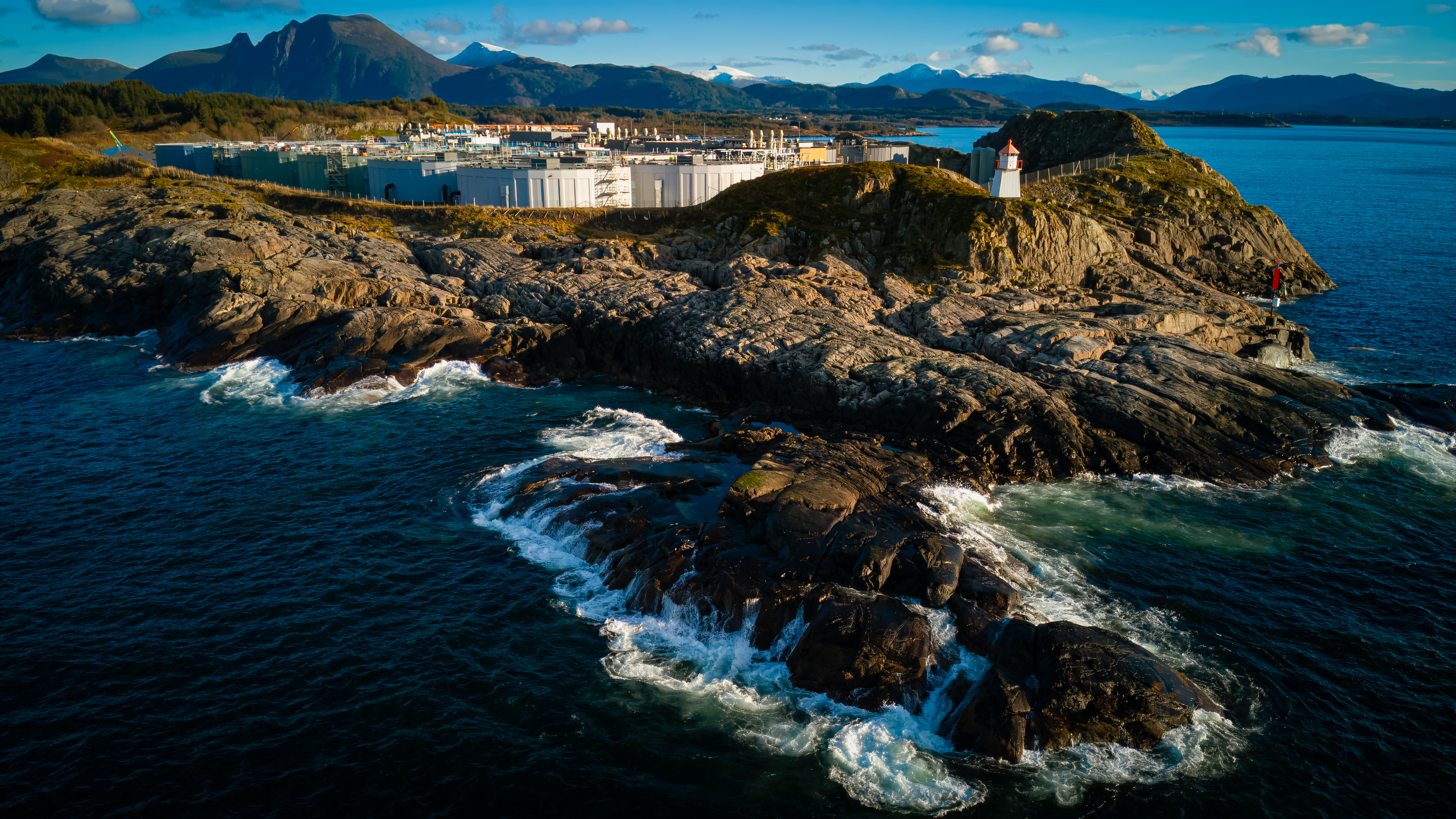
Photo: Drone overview Indre Harøy January 2026
By optimizing water quality parameters with ideal and stable temperatures, we can reduce the time to harvesting for each batch from approximately 16 to 11 months with a 130g smolt insert weight. This increased growth creates the basis for greater production efficiency and optimal utilization of our licensed volume.
Finally, our operations reduce the handling of fish, which provide better opportunities for optimal feeding and reduces loss and stress during the production cycle.
Key Points – Fish Health & Welfare
- The HFS technology creates an optimal and stable growth environment, which is less stressful for our fish.
- We ensure biosecurity through separate tanks and distinct biological zones.
- Filtered seawater further minimizes the risk of bacterial and viral pathogens; minimizes risk of parasites; and limits threats of infection.
- We engage in minimal handling of our fish.
By maintaining control over the production environment and stable water parameters, we generate conditions for increased growth and a shorter time to harvest. Our approach ensures better fish health and well-being, including reduced mortality and losses in production.
Sustainable Inputs and Outputs
At full run rate in phase 1, we estimate a harvest volume of approximately 7,900 tonnes (HOG, or head on gutted), with a strong focus on optimising our sustainable inputs while reducing negative impacts for our outputs for this volume. Our most dominating inputs consist of seawater, feed, power, smolt, and oxygen.
Since 2021 Salmon Evolution has had a strategic feed partnership with Cargill. Salmon Evolution is Cargills global flagship customer for land-based full grow out production.
Cargill has further committed to allocate significant resources and R&D capacity with the ambition to develop sustainable feed solutions tailored to our operational targets: securing high biological performance and premium product quality.
Cargill also owns 2.0% of Salmon Evolution. When asked about the importance of the partnership with Cargill, the CEO of Salmon Evolution stated:
“Having the best possible feed is essential for every salmon farmer. Particularly, in our HFS system where we create optimal and stable living conditions for the salmon, we see a strong and untapped potential in tailoring a feed focused on maximizing biological performance and product quality.”
Estimated data for Phase 1 at full run rate:
- 100 % local seawater intake
- 9,300 tonnes of feed, corresponding to GHG emissions of 14,500 tons CO2 eq. excluding land use change (GW_E_LUC) and 18,100 tons CO2 eq. including land use change (GW_I_LUC).
Another important input is smolt. Salmon Evolution has its own smolt production at Salmon Evolution Dale AS in Dalsfjorden in Volda municipality, Norway. The location has a documented track record as a high quality smolt producer and has been producing smolt since 1995.
One of the major advantages with Salmon Evolution Dale is its excellent freshwater supply. Salmon Evolution Dale has access to clean freshwater from the surrounding mountains and is guaranteed a consistent supply of freshwater from the local power station.
This freshwater access enables Salmon Evolution Dale to utilize a similar production technology as Salmon Evolution uses at its grow-out facility, a hybrid flow-through system (HFS) with reuse of water, CO2 stripping and oxygenation- making it a perfect fit for Salmon Evolution.
Having an in-house smolt production gives Salmon Evolution operational control over a critical part of the value chain.
In addition to feed and smolt, another essential input is oxygen, which is supplied by Nippon Gases. We share many of the same values, making this an ideal partnership. During our selection process, one of the most important factors was the focus Nippon Gases has on sustainability.
By prioritising responsible suppliers, we can ensure that we use sustainable inputs, leading us to create a truly healthy and sustainable final product.
SocialSalmon Evolution remains steadfast in our commitment to responsible business practices. Upholding human rights, ensuring labor standards, and fostering equality and non-discrimination are fundamental principles embedded in our operations.
We aim to be a safe, inclusive, and stimulating workplace while minimizing any potential negative societal impacts of our activities.
Through our investments, we have fostered positive ripple effects in local communities, contributing to social development and economic growth. To ensure accountability and transparency, we continue to implement and refine policies regarding health and safety, the working environment, stakeholder engagement, and the sustainable use of local resources.
We look forward to advancing these efforts holistically to align with our long-term vision for sustainable development.
Employee Well-Being, Health & Safety
Safe and Secure Workplaces
| Salmon Evolution Employees | 2025 | |
|---|---|---|
| Lost Time Injuries (LTI) | 0 | ✓ |
| Total Recordable Injuries (TRI) | 0 | ✓ |
| Accidents | 0 | ✓ |
| Fatal Accidents | 0 | ✓ |
| Sick Leave (%) | 3.9 | ✓ |
| Sick Leave Cases (<16 days) | 388 | ✓ |
| Sick Leave Cases (>16 days) | 86 | ✓ |
| Contract Workers | 2025 | |
|---|---|---|
| Lost Time Injuries (LTI) | 0 | ✓ |
| Total Recordable Injuries (TRI) | 0 | ✓ |
| Fatal Accidents | 0 | ✓ |
| Third Parties | 0 | ✓ |
| Fatal Accidents | 0 | ✓ |
We prioritise the highest standards of safety across our operations and expect our suppliers and partners to adhere to responsible labor practices. As part of our 2025 vision, we encourage all contractors and partners with operational activities to pursue ISO 45001 certification, the global standard for safe and healthy workplaces.
Parental Leave: Two male and one female returned from parental leave in 2024, seven male employees began and returned from leave, while two male began their leave and had not returned by year-end.
The high activity and operational complexity at our Indre Harøy site in 2025 emphasized the importance of robust safety protocols. To mitigate risks and ensure safe working conditions, we maintained close collaboration with contractors and workers while enhancing safety routines.
Our Health, Safety & Environment (HSE) Coordinator oversees on-site training, preventive HSE activities, and incident investigations. All new employees and contractors participate in HSE induction training, with additional courses provided in first aid and safety awareness.
Additionally, Salmon Evolution has appointed a Safety Representative to monitor compliance with established protocols. All documentation related to incidents, investigations, and preventive actions is managed through third-party systems, TQM and Interaxo, ensuring transparency and accountability in all safety-related efforts.
Worker Organization and Collective Agreement
In 2024, our workers organized and joined a labor union, and Salmon Evolution signed an attachment agreement to the aquaculture collective agreement. This milestone highlights our commitment to fostering constructive dialogue with employees and ensuring fair and equitable working conditions.
Apprentices
In 2025 we welcomed seven new apprentices, totaling ten apprentices during the year. Two apprentices graduated and were hired permanently. Historically we have had four apprentices that have graduated and been offered permanent positions whereas four have accepted the offer. 100% of our apprentices have passed their exams with great results.
Engagement and Development
In 2025, we conducted four employee engagement surveys across the organization, achieving a 78% response rate and an average engagement score of 77, which is in line with the external benchmark of 78. These results underscore the dedication and satisfaction of our workforce, as well as the effectiveness of our employee-centered initiatives. We plan to continue conducting quarterly surveys to gain real-time insights into the organizational culture and use this feedback to drive positive changes and inform strategic decisions.
100% (discounting employees on parental leave) of our employees had performance and development reviews in 2025. We will continue our regular performance and career development reviews, conducted semi-annually.
To foster leadership within our organization, we established a leadership development program and sent five young leaders to participate in 2024. This program aims to cultivate future leaders, equipping them with the tools and knowledge necessary to drive both their personal growth and the company’s progress.
To support employee well-being outside of work, Salmon Evolution has established a corporate sports team to encourage health and wellness after working hours. Both in 2024 and in 2025, many of our employees participated in the Stranda Fjord Trail Race, completing a challenging course of 25 kilometers and 1,850 vertical meters. This achievement reflects our commitment to promoting an active and healthy lifestyle among our workforce.
Diversity and Equal Opportunity
Salmon Evolution is committed to creating an inclusive workplace that attracts top talent and promotes equal opportunities.
We continuously work to eliminate discrimination and harassment, ensuring fair treatment for all employees regardless of gender, ethnicity, nationality, religion, sexual orientation, or other personal attributes.
Our recruitment, training, and advancement processes prioritize qualifications, skills, and performance. We maintain a zero-tolerance policy for discrimination and harassment, as outlined in our Code of Conduct and Personnel Handbook.
One case related to personnel matters was reported and resolved in accordance with our established procedures. Going forward, we will further strengthen our diversity, equity, and inclusion initiatives to ensure Salmon Evolution remains a workplace where everyone can thrive.
0
ACCIDENTS IN 2025
0
LOST TIME INJURIES (LTI)
Responsible Supply Chain
Our suppliers are important contributors to the success of our business. We believe that transparent and frequent communication with both our customers and suppliers is vital for our success. We work closely with our suppliers and customers to minimize negative impact of our supply chain, and we will continue to develop partnerships focusing on sustainability.
Suppliers that are in breach of our basic standards for ethics and corporate social responsibilities can be disqualified for new tenders. However, if they do not comply with our standards, we first aim to work with the supplier to bring about improvements. If the supplier still does not comply, Salmon Evolution will seek to terminate the supplier relationship.
Salmon Evolution suppliers shall have standards for ethics and corporate social responsibility that follow the UN Global Compact principles. This shall apply to all suppliers as well as partnerships and employees.
“Salmon Evolution suppliers shall have standards for ethics and corporate social responsibility that follow the UN Global Compact principles. This shall apply to all suppliers as well as partnerships and employees.”
Stakeholder and Local Engagement
Local Value Creation
Given that our land-based facility is located on Indre Harøy in Hustadvika municipality, Norway, we decided in 2019 to move our head office from Molde municipality to Elnesvågen, Hustadvika. The physical relocation was done during the first two months of 2022.
Indre Harøy is a significant investment. From this, we have seen a major ripple effect for both the Møre og Romsdal region and Hustadvika municipality, in the form of large contracts to local suppliers. This has led to comprehensive investments in their own companies. For example, food services are provided by local companies, many of whom have seen record growth, which has led to further investments in the municipality. Other investments our local suppliers have made include office premises and associated infrastructure, which have directly contributed to further local contracts and increased employment opportunities.
We are now well underway in the process of building the second phase at Indre Harøy, with a total investment of approx. NOK 2.5 billion, which we also expect will have further major ripple effects in the region and municipality. In total, Indre Harøy has employed around 200-250 workers daily through these contracts. Many of the company’s hired contractors are temporarily housed at local hotels while working at the construction site. The communities we impact on, from the municipality to local inhabitants, have reacted positively to these developments.
Stakeholder Engagement
Dialogue and engagement with our stakeholders help us understand what is expected of us, what is most important to our stakeholders, how they are impacted by our operations, and how we can work together in solving common challenges.
In 2024, during the double materiality assessment, we reviewed our stakeholders and identified seven groups that we have the possibility to impact or be impacted by.
These are listed below:
- Shareholders, investors, assets managers and analysts
- Employees and potential employees
- Local communities and municipalities
- Customers
- National authorities and regulators
- Financial institutions
- Suppliers and service providers
Throughout 2025 we have been in regular contact with our employees, the local community and municipality, our customers, and our suppliers and service providers as part of our daily operations. Quarterly reports and presentations, and the latest relevant news from our company, are presented on our website.
Over the next year, we commit to have a continued focus on creating arenas for systematic and open dialogue with these groups to understand our impacts. We are committed to being a responsible business through interacting with our stakeholders in both an ethical and transparent manner.
Respectful Use of Land
The site of our land-based facility was originally a disused quarry. After over 30 years of operation, the quarry was emptied and remained vacant. Because the land was left in this state, there was very limited need for intrusive activities in the nature to complete the construction of our facility for farming salmon.
Converting the disused quarry has provided an opportunity for us to engage in value-creating activities in an area where there were limited opportunities for this. We made great efforts to create an optimal balance between generating value for local people and communities, while severely limiting land-conversion and our impact on the environment.
Going Forward
Salmon Evolution will continue to prioritize local suppliers for our contracts. We will develop good relationships with local communities through creating an open dialogue and expanding our engagement efforts. We believe that our operations should have as little negative impact as possible, and as we grow, we will develop new ways to monitor and assess our efforts.